Trap • Neuter • Return (TNR)
The Spay at Neuter Program is a cooperation between New Hope and the Baker City Police Department. Trap/Neuter/Return (TNR) is a program to humanely trap feral (community) cats, neuter, and return them back to where they were trapped. TNR is a humane alternative to euthanasia for reducing feral cat populations.

Stray cats, feral cats, free-roaming cats. Whatever the name, cats that don’t seem to belong to anyone reproduce and the population quickly becomes too large. If you are feeding the cats, the expense becomes unaffordable. Before that happens: control the population by Trap-Neuter-Return.
Program Details
Trap–Neuter–Return (TNR) is a humane method used to manage populations of stray and feral cats. Instead of removing or euthanizing them, it stabilizes and gradually reduces their numbers over time. Here’s how it works step by step:
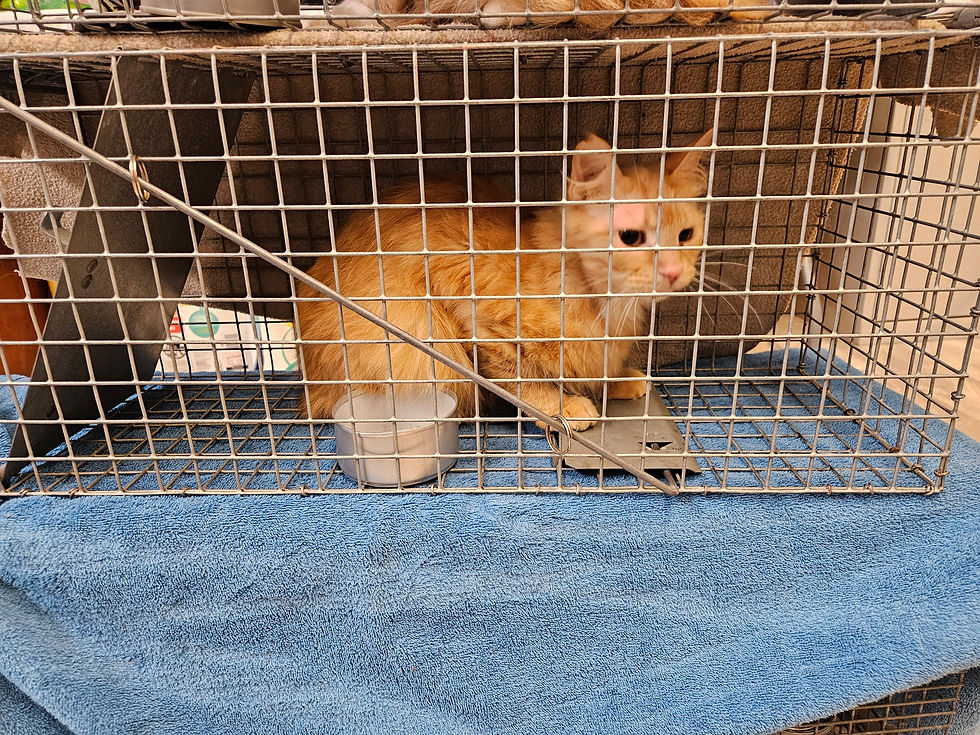
1.Trap
Volunteers or animal control workers humanely capture free-roaming cats using safe, baited traps.
2. Neuter (or Spay)
The captured cats are taken to a veterinary clinic where they are:
-
Spayed or neutered (so they can’t reproduce)
-
Ear-tipped (a small part of the ear is clipped under anesthesia) to show they’ve already been neutered
3. Return
After recovery, the cats are returned to the same location where they were found. That’s important because:
-
Cats are territorial and would otherwise be replaced by new, unsterilized cats
-
They already know how to survive in that environment
-
There is nowhere else to take them
What it achieves
Over time, TNR:
-
Reduces population growth (no new litters)
-
Decreases nuisance behaviors like fighting, spraying, and loud mating calls
-
Improves cat health due to lower population density and less stress from breeding
For complete details about the TNR process, go to www.feralcats.com
-
Unspayed kittens can become fertile as early as five months old, and littermates will mate. On average, an unspayed cat has two litters per year with about three surviving kittens each. When those kittens begin reproducing as well, the numbers grow quickly—about 12 cats within the first year and roughly 67 by the second year. And the cycle continues.
Problems caused by cat overpopulation:
-
Disease spread: When populations become dense, illness spreads easily. Upper respiratory infections (URI) are common, along with conditions such as ringworm.
-
Unsanitary conditions: Large numbers of cats produce significant amounts of feces, creating odor and sanitation issues.
-
Nuisance behaviors: Territorial marking, spraying, and late-night fighting become more frequent.
-
Rising costs: Feeding large numbers of cats can become very expensive.
-
Returning cats back into their territories prevents other unneutered cats from entering the area. Since the neutered cats are not able to reproduce more litters, the population of feral cats declines over time. This process is cheaper than euthanasia and is more effective than eradication.
New Hope volunteers can help with however much assistance a cat colony care-giver needs. Tell us your situation and what help you need and we can plan to get it done. Our first priority is to ensure the cats are spayed and neutered to prevent new litters of kittens. We appreciate whatever financial contribution the cat care-givers can provide but it is not necessary at the time of the vet appointment.
New Hope can:
-
Make veterinary clinic appointments
-
Lend traps
-
Teach cat care-givers how the traps work
-
Give general advice from our experience trapping cats.
-
Transport cats to the vet and back
-
Assist with costs
-
Spay Surgery: $70 to $160
Neuter Surgery: $50 to $100
Traps: $74 to $94
Mileage to vet clinic: $25/trip
Several programs may help cover the cost.
Molly Atwater Spay/Neuter Voucher Program
administered by Best Friends of Baker, Inc.:-
$50 toward a spay
-
$40 toward a neuter
SpayUSA Subsidy Program
Funding is available for stray and feral cat caretakers.-
The caretaker must apply.
-
Applications are available from the 1st–15th of each month only.
-
Surgery must be performed at a participating veterinary clinic.
-
Animal Health Center is a participating clinic.
Funds for financial assistance are provided by donations to these programs. Donations are welcome and necessary to continue to work.
-
We DO NOT have pet cats available for adoption.
Best Friends of Baker, Inc. has cats available for adoption.
If you are looking for barn cats, we may be able to help. Relocating a cat to a new location requires the ability to securely contain the cats for several weeks so they can become accustomed to their new environment. Without this acclimation period, cats are likely to leave. Ongoing food and water must also be provided.